
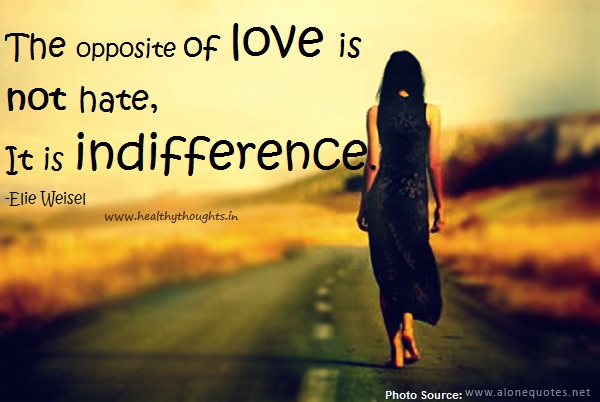
I think so many of us in our culture do serious battle with our dark side or shadow. Especially those, who like me, were raised and schooled in by Catholic nuns, struggle with our deeper darker impulses at times and we get confused and conditioned into being or doing ‘good’ when really its just human impulse to often not feel feelings that are all good, most especially as children.
Ideally some of us were lucky enough to have parents who could handle it, when as kids we felt hate, anger or rage towards them and could hold that energy in love without flipping out. If we don’t learn how and what this energy is about as youngsters and have it mediated and contained for us, it can prove problematic in later relationships. For example when someone does something that upsets us or violates our boundaries we swallow our hurt or we try to impress by hiding those deeper impulses or darker fears negating our true self in the process and even becoming ill. We fear expressing how we feel or react as we fear we will be abandoned or the relationship destroyed. We may walk away instead of confronting issues or in ‘making nice’, keep our relationships shallow.
My therapist often says to me that anger is the last cry of the true self. We can get angry when a very real impulse or need is thwarted, minimised or dismissed. We can get angry when we are hurt or not treated with respect and we can get angry when we are actually grieving as well, but there is usually a sound historical basis for our anger.
I would like to share the following as it explains how important it is that we find a holding place for darker feelings, most especially in intimate relationships.
All children harbour destructive wishes towards their parents. Both love and hate are a part of the child’s feeling world. When she can discover that she does not have the power to destroy her parents’ love or presence in her life, even though at times she may wish to, she can integrate both of these feelings within herself as being a natural part of any deep intimate relationship. When she cannot, when she is forced by circumstance to relegate negative feelings to her unconscious, those feelings may find expression in passive aggressive or other destructive ways They may even be turned against the self, where they confuse the child and make her guilty over what she caries in the silence of her mind. She will be forced to split off part of herself.
Unintegrated feelings from childhood carry over into intimate relationships all throughout our life. We all know people who can acknowledge only one aspect of self, who are unable to see for example, negative qualities in a spouse because those qualities seem to be threatening. Their unconscious fear that if they allow themselves to see the negative qualities and feel the feelings, they will destroy the relationship, keeps them in denial. The problem may be that they were neer really allowed to see these aspects of their own parents, to learn in childhood that these feelings were natural. Eventually, for any deep intimate relationship to survive it will need to accommodate the good and the bad, the liked and the disliked. This shows deeper relationships can remain alive and people can continue to grow within them. Otherwise the relationship tends to become role typed and stratified. People who are happy togther have generally learned to accommodate the whole of the person to whom they are related, which allows the soul of the relationship to flow more freely.
Love does not cause suffering;
what causes it is the sense of ownership,
which is love’s opposite.
Antoine de Saint-Exupery
 Emerging From The Dark Night
thank you. so insightful.
LikeLiked by 1 person
A lot of this is inspired by Tian Dayton Martha if you can check out her work its well worth it. Some of her books have helped me so much and are my go to resource for emotional recovery. Love Deborah
LikeLiked by 1 person
i will look for her. thanks so much!
LikeLiked by 1 person
She may even have a website. If I can find the link I will share it. x Im sure if you google her it will come up.
LikeLiked by 1 person
I agree that anger is indeed a last resort. To me, it connotes ownership. As in, the person who lashes out in anger is owned- by unresolved issues, by their past, etc. I never thought about a person’s childhood as being a true link to their intimate relationships going forward. Well, I have thought about it , but in more of a general sense.
I really like that excerpt.
Peace
LikeLiked by 1 person
Yes we can and do get triggered. Its not easy to own it and see it at times. Its takes inner work. Peace in return.
LikeLiked by 1 person